When my 4-year-old first started asking to use scissors, I honestly didn’t think much of it. I just gave her a pair of child-safe scissors and a piece of paper and thought, “Let her do it however,” but it turned out that preschool cutting practice is actually a skill children have to learn step by step. In this post, I’m sharing what I learned about preschool cutting practice, how I helped my child build scissor skills step by step, a simple activity you can try at home, and a free preschool cutting practice printable pack.
After watching my preschooler struggle with scissors a bit, I started browsing Google and reading more about preschool cutting practice and scissor skills, and what I discovered made a lot of sense. Some occupational therapists and early childhood educators often say that cutting activities are one of the best ways to build the fine motor skills children need for writing later on. I agree! So I started paying more attention to how my kids practice cutting, and over time, we found a few simple things that really helped.
This post may contain affiliate links. This means that if you click on a link and buy something, I may earn a small commission at no extra cost to you. Thank you for supporting 3craftmama!
Why Preschool Cutting Practice Is So Important
Before children learn to write letters, their hands need to develop strength and coordination, and from what I’ve read and observed with my own kids, scissor practice helps build many of the small hand muscles children later use for writing. Also, according to many pediatric occupational therapists, activities like cutting help children develop things such as:
- hand strength
- hand-eye coordination
- focus and control
- bilateral coordination (using both hands together)
And honestly, once I understood this, I started seeing cutting practice less as a random craft activity and more as an important learning skill.
Preschool Cutting Practice for Beginners
One thing I learned pretty quickly with my four-year-old is that starting with complicated shapes right away goes wrong quickly, and then she becomes frustrated. So I decided it’s better to start cutting practice with very simple cutting lines, because that’s when it works best.
Such simple cutting lines include:
- straight lines
- thick lines
- short strips of paper
And once my preschooler started to feel confident, we moved on to:
- zigzag lines
- curved lines
- simple shapes
Also, I noticed that this kind of gradual progression helped my daughter build her confidence instead of getting her frustrated.
Preschool Cutting Practice Worksheets and Simple Activities
One of the easiest ways I found to help my child practice was by using preschool cutting practice worksheets. I go on the internet to search for free printables, download them and print them out. I found that these are great because they give my kids clear lines to follow, which makes cutting feel more like a little challenge.
Here are a few ways we use them at home:
- colouring the shapes first
- cutting along the lines
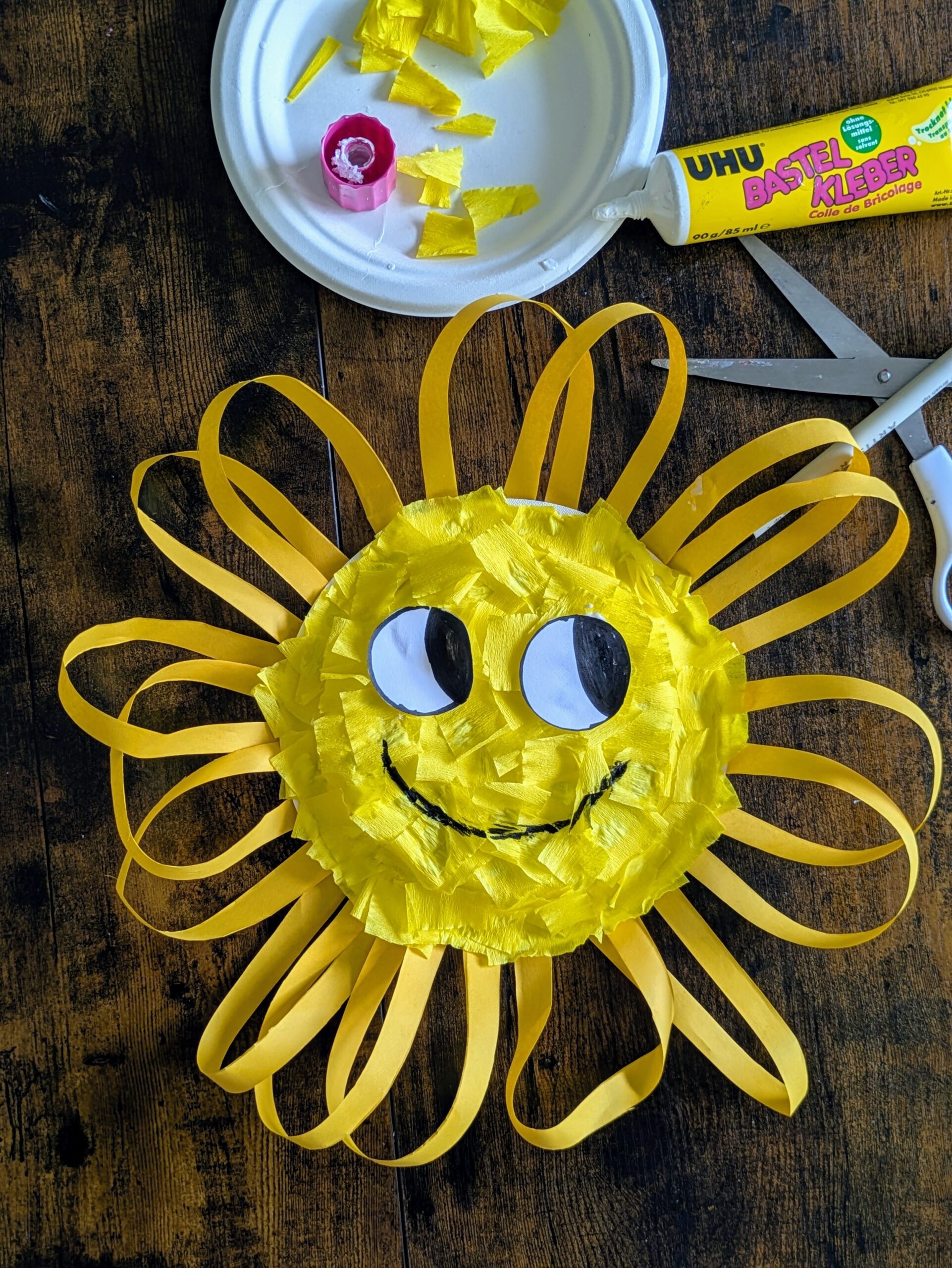
- glueing the cut pieces onto another sheet to make a picture
It turns cutting into a fun little project instead of just practice, just like many of the simple craft activities we do at home with everyday materials.
Free Preschool Cutting Practice Printable
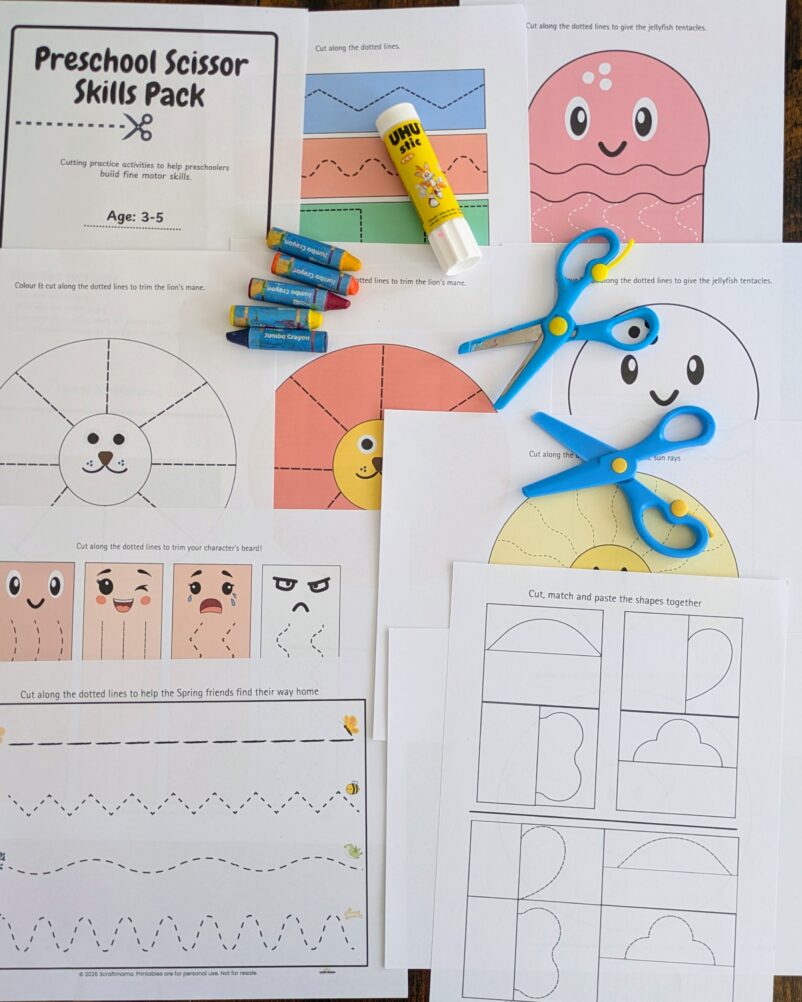
Because we were doing so much cutting practice at home, I ended up making a simple preschool cutting practice printable for my kids.
It includes:
- beginner cutting lines
- easy shapes for preschoolers
- thicker lines that are easier to follow
Your kids can:
- Colour the characters
- Cut along the lines
- And glue them onto another paper to create a collage
If you’d like to try it with your child, too, you can grab the printable here:
This free preschool cutting practice pack includes:
• 10 fun scissor practice pages
• beginner cutting lines
• coloured and black-and-white activity pages
• fun characters like lions, jellyfish, sunshine and spring friends
• simple cutting challenges perfect for preschoolers
Download my FREE preschool cutting practice printable pack
A Preschool Cutting Practice Activity My 4-Year-Old Loves
While we love printables, I’ve also noticed my kids sometimes enjoy structured activity books even more. So, recently we tried the Skillmatics Snip Snip cutting activity book, and it has actually been really helpful for practising scissor skills.
What I like about it is that it’s designed for beginner cutters and each page has:
- bold cutting lines
- fun characters and pictures
- Cut and paste activities
- Cut and craft activities
- It has different cutting levels for different ages (from easy to more challenging)
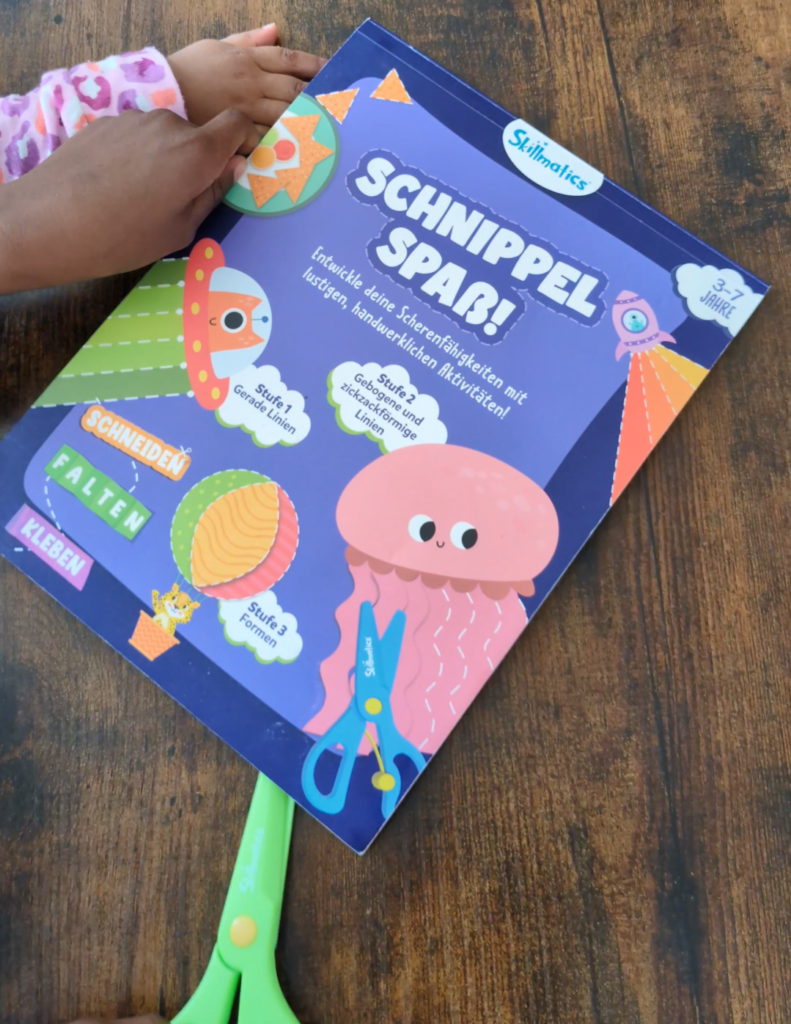
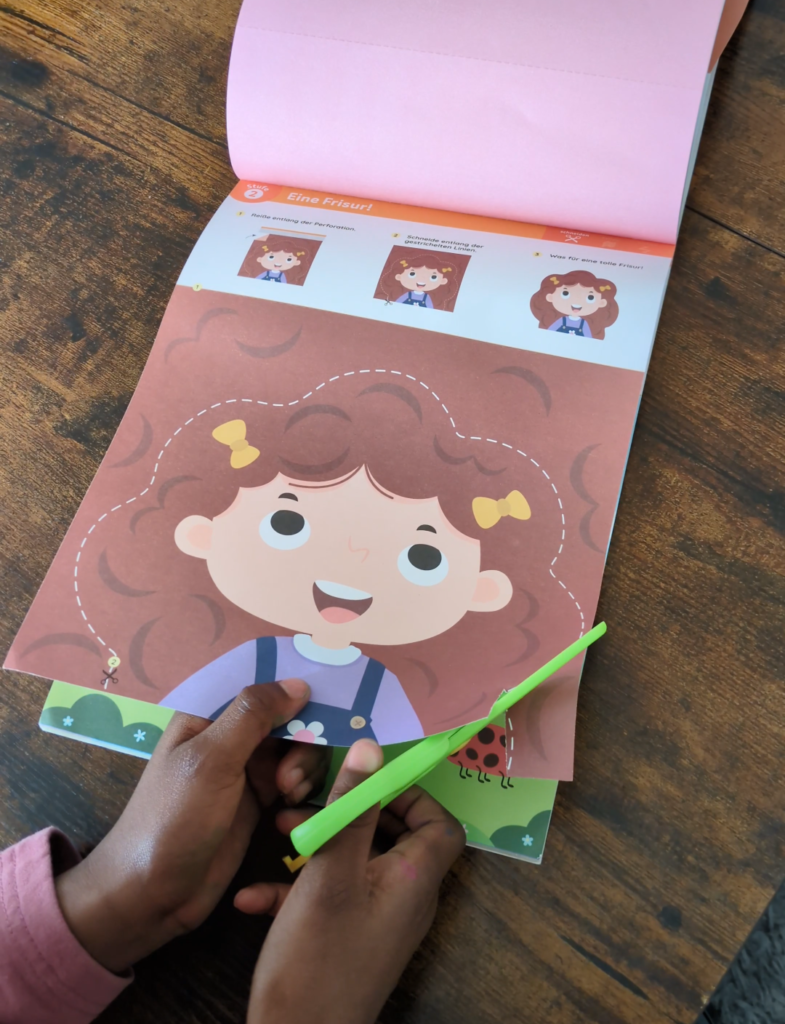
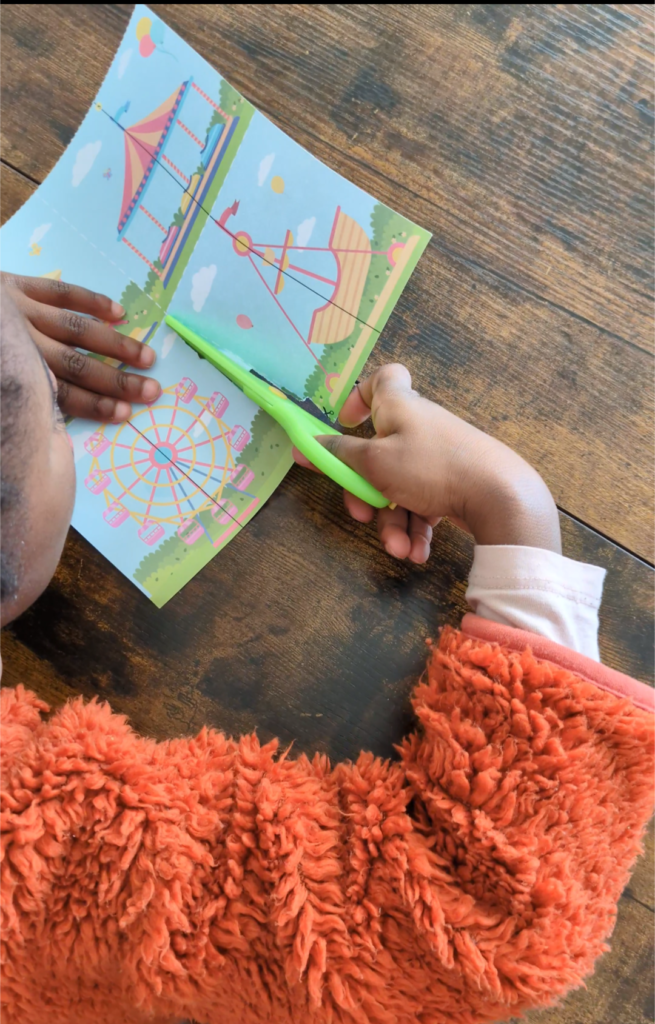
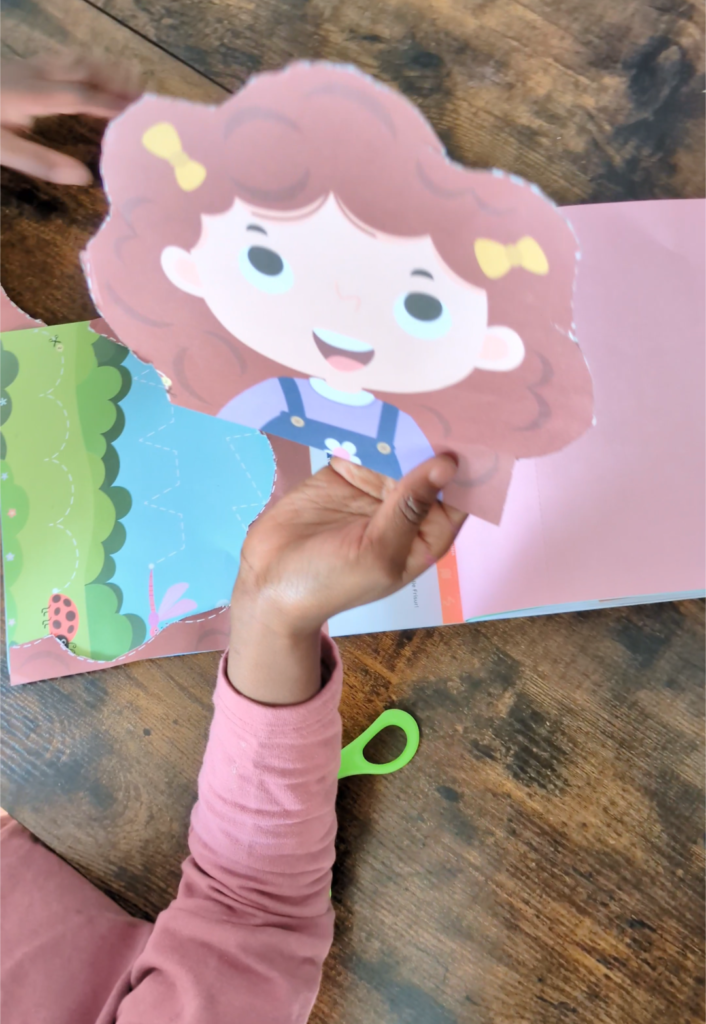
Now your child gets to start with very simple cuts and build motor skills at the same time. My kids especially like that each page feels like a little fun cutting and crafting challenge. If your child enjoys hands-on activities like this, you might also enjoy these easy activities for preschoolers.
If you’re curious, you can check out the Skillmatics Snip Snip! Art & Craft Activity Kit (ages 3-7)
Preschool Cutting Practice Sheets vs Activity Books
After trying both, I think cutting practice sheets and activity books actually work really well together, and just to share with you, here’s how we use both at home.
For the cutting practice sheets:
We use them for: Quick practice sessions, quiet time activities, no-prep after-kindergarten busy activity, etc.
For the cutting activity books
We use them for longer engagement, guided cutting challenges and gradual skill building. You can steal our method if you’d like, but one thing I know is that using both has given my kids lots of opportunities to practice scissors without it feeling repetitive.
Tips I Learned While Teaching My Preschooler to Cut
After doing quite a bit of preschool cutting practice at home, here are a few things that helped us.
- Using small scissors designed for preschoolers is much easier for my four-year-old, especially since she has such tiny fingers, and it helps her hold the scissors better.
- Another thing I learned, and one tip, is from other early childhood teachers, that the thumb should always point upward while cutting. Yup, we tried it, and it works, but sometimes her thumb still slips off now and then.
- Construction paper is often easier for beginners than thin printer paper, and that’s because construction paper is softer.
- I learned to keep it short, because a few minutes of cutting practice is usually enough for preschoolers. Anything more than that and you m,ight have a frustrated child on your hands.
More Easy Cutting Activities for Preschoolers
Besides worksheets and activity books, here are other simple cutting activities for preschoolers that we sometimes do at home:
- playdough snakes
- paper strips
- magazine pictures
- coloured craft paper
- paper straws
These small activities can really help strengthen fine motor skills and scissor control.You could also try toilet paper roll crafts for toddlers, which are another fun way to build fine motor skills.
Finally, on preschool cutting practice
After learning more about fine motor development and preschool scissor skills, I realised that cutting practice is actually an important step in early learning, and using simple tools like:
- preschool cutting practice worksheets
- printable cutting practice sheets
- and activity books like Skillmatics Snip Snip
has made a big difference in helping my kids feel confident using scissors. So, if you’d like something easy to start with, you can grab the free preschool cutting practice printable above. And if your child enjoys structured cutting activities, you can also check out the Skillmatics Snip Snip cutting book here.